
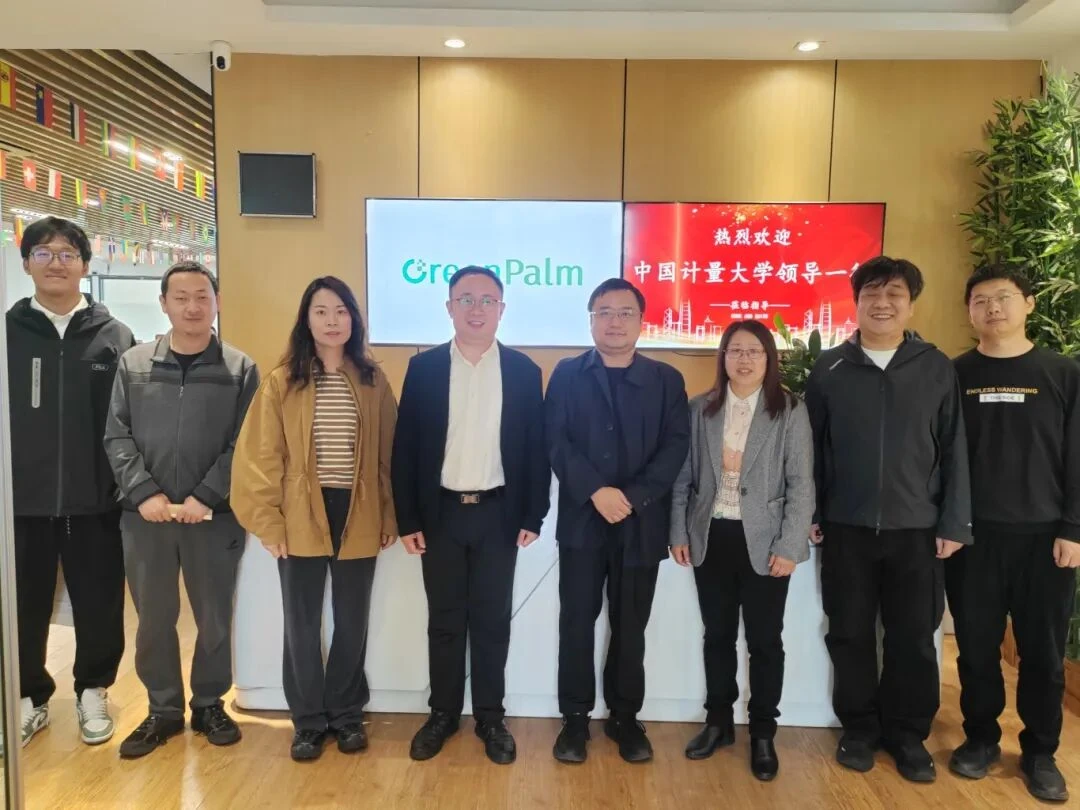
On April 30, 2026, a delegation led by Yang Guangjun, Party Secretary of the School of Information Engineering at China Jiliang University, visited Hangzhou GreenPalm Technology for discussions on university–industry cooperation. The visit focused on recruitment, joint research, curriculum development, academic competitions, and practical training bases, connecting university talent development with industry needs and identifying practical areas for collaboration.
Academic Strength and Innovation in Talent Development
At the start of the meeting, Yang Guangjun introduced the School of Information Engineering’s academic strengths, disciplinary development, and talent training system. As one of China Jiliang University’s established core schools, it has a strong faculty and a comprehensive training framework covering electronic information, communications, computer science, and artificial intelligence.
Yang explained that the visit aimed to understand the needs of the power and energy industry, GreenPalm’s development plans, and its requirements for talent. The school will draw on its academic strengths to connect qualified technical graduates with industry, while using practical business settings to strengthen hands-on teaching.
GreenPalm’s Development in Global Power and Energy Technology
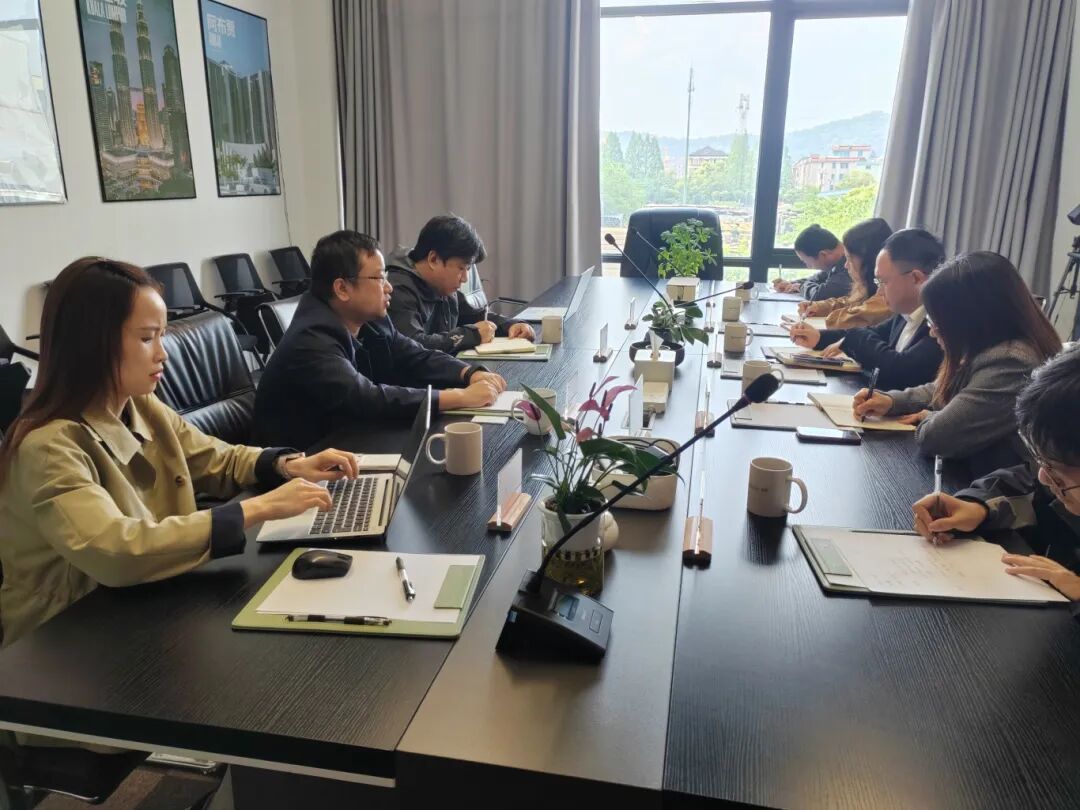
Mr. Si welcomed the delegation and introduced GreenPalm’s business and capabilities. The company focuses on electricity meters, power-line HPLC chips, power communications, distribution automation, and power system software. Alongside its work in China’s State Grid and China Southern Power Grid markets, GreenPalm has expanded into power contracting projects in the Middle East, Africa, and South America. It has also established a joint laboratory with Hangzhou Dianzi University and worked on national-level research projects.
Mr. Si outlined the company’s future plans and recruitment priorities. With independent research and development at its core, GreenPalm has a professional R&D team of around 100 people and plans to strengthen its in-house manufacturing capabilities. A new 30,000-square-metre industrial park in Xiasha is expected to support upgrades to production capacity and R&D. Recruitment focuses on relevant technical backgrounds and English proficiency, particularly in electronic information, communications, computer science, and AI. Overseas roles require strong English skills and the ability to travel or work on-site abroad.
Expanding Paths for University–Industry Cooperation
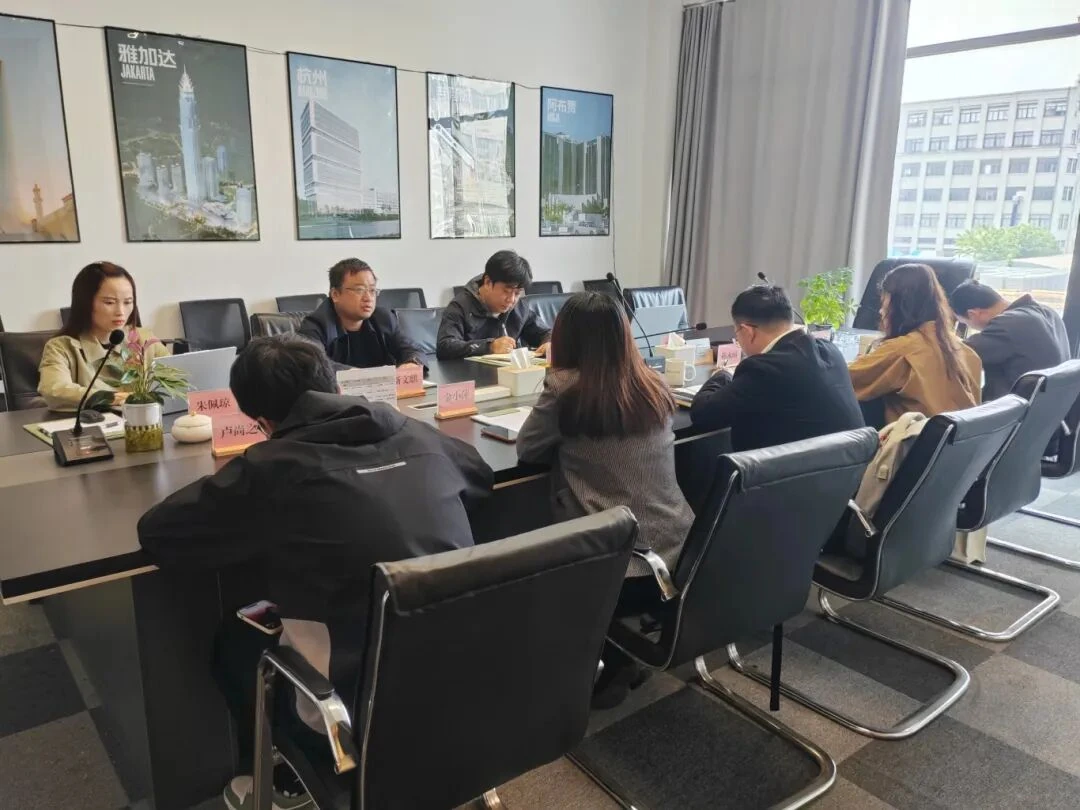
Director Jin proposed six practical and sustainable areas for collaboration, drawing on the complementary resources of the university and the company.
- Joint research projects: GreenPalm can lead projects using its power-industry resources, while the university contributes theoretical and technical support and jointly applies for research funding.
- Long-term industry-funded research: Develop a three-to-five-year cooperation plan, align research with business needs, establish joint laboratories, and tackle challenges in power communications, power-sector AI, and intelligent inspection.
- Technology and intellectual property: Provide technical guidance for feasibility studies, patent planning, and the commercialization of research results.
- Internship and practical training bases: Establish an official internship base for curriculum-based placements and vacation internships, using real industry settings to build practical skills.
- Joint teaching and mentoring: Invite industry experts to serve as external mentors, give lectures, supervise graduation projects, and contribute to curriculum development.
- Customized courses: Co-develop courses taught by company specialists and provide pre-employment training to improve students’ readiness for technical roles.
The two sides also discussed cooperation in high-level academic competitions, including industry tracks in national competitions such as the Challenge Cup. Topics would address real power-grid challenges, with selected student teams working on practical problems at the company. GreenPalm would provide technical guidance and facilities, while the university would contribute theoretical research support. The collaboration will encourage technically motivated students with strong communication skills and develop future talent for the power and energy sector.
Building a Shared Future Through Cooperation
The visit connected GreenPalm’s needs in recruitment and technical development with the university’s priorities in practical teaching and applied research. GreenPalm and the School of Information Engineering will establish regular communication and advance cooperation in internships, joint laboratories, and academic competitions. By combining industry resources with academic expertise, both sides aim to support digital development in power and energy and cultivate technically capable graduates with practical experience.